Featured
Table of Contents
- – The Shift from Standard Indexing to Intelligen...
- – Facilities Resilience for Big Scale Operations...
- – Content Intelligence and Semantic Mapping Methods
- – Technical Requirements for AI Search Optimizat...
- – Scaling Localized Visibility in Tulsa and Beyond
- – The Future of Business Technical Audits
The Shift from Standard Indexing to Intelligent Retrieval in 2026
Big enterprise websites now face a reality where standard online search engine indexing is no longer the last objective. In 2026, the focus has moved toward intelligent retrieval-- the process where AI models and generative engines do not simply crawl a site, but attempt to comprehend the underlying intent and accurate accuracy of every page. For companies operating throughout Tulsa or metropolitan areas, a technical audit must now account for how these massive datasets are analyzed by big language models (LLMs) and Generative Experience Optimization (GEO) systems.
Technical SEO audits for enterprise sites with countless URLs need more than simply checking status codes. The large volume of data necessitates a concentrate on entity-first structures. Search engines now focus on sites that clearly define the relationships in between their services, locations, and workers. Lots of companies now invest greatly in AI Platform to guarantee that their digital possessions are correctly categorized within the global knowledge chart. This involves moving beyond basic keyword matching and looking into semantic importance and information density.
Facilities Resilience for Big Scale Operations in OK
Preserving a website with hundreds of thousands of active pages in Tulsa requires a facilities that focuses on render efficiency over easy crawl frequency. In 2026, the principle of a crawl budget has actually developed into a computation budget plan. Browse engines are more selective about which pages they spend resources on to render fully. If a website's JavaScript execution is too resource-heavy or its server reaction time lags, the AI representatives accountable for data extraction may just avoid large areas of the directory site.
Investigating these sites involves a deep evaluation of edge shipment networks and server-side rendering (SSR) configurations. High-performance business often find that localized material for Tulsa or specific territories requires unique technical managing to preserve speed. More business are turning to New AI Search Platform for growth because it attends to these low-level technical traffic jams that prevent material from appearing in AI-generated responses. A hold-up of even a couple of hundred milliseconds can result in a substantial drop in how frequently a website is used as a main source for online search engine reactions.
Content Intelligence and Semantic Mapping Methods
Content intelligence has become the cornerstone of contemporary auditing. It is no longer adequate to have high-quality writing. The info should be structured so that search engines can verify its truthfulness. Industry leaders like Steve Morris have pointed out that AI search visibility depends on how well a website supplies "proven nodes" of details. This is where platforms like RankOS come into play, providing a method to take a look at how a website's information is perceived by various search algorithms concurrently. The goal is to close the gap between what a business provides and what the AI anticipates a user requires.
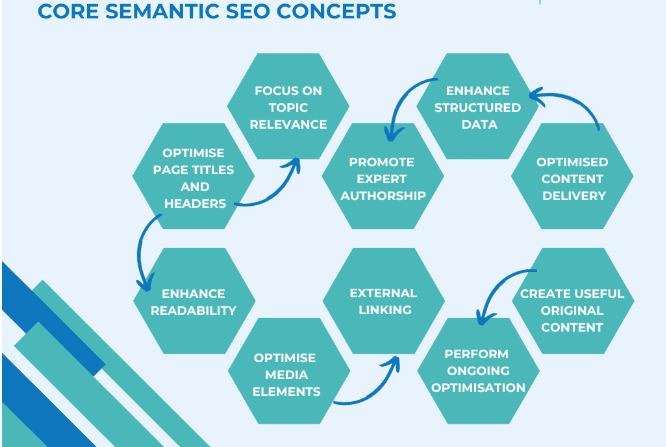
Auditors now use content intelligence to draw up semantic clusters. These clusters group associated topics together, guaranteeing that a business site has "topical authority" in a specific niche. For a service offering professional solutions in Tulsa, this suggests guaranteeing that every page about a specific service links to supporting research study, case studies, and regional information. This internal linking structure acts as a map for AI, assisting it through the site's hierarchy and making the relationship between various pages clear.
Technical Requirements for AI Search Optimization (AEO/GEO)

As search engines shift into answering engines, technical audits should evaluate a site's readiness for AI Search Optimization. This consists of the application of sophisticated Schema.org vocabularies that were once considered optional. In 2026, particular homes like mentions, about, and knowsAbout are utilized to indicate know-how to browse bots. For a website localized for OK, these markers help the online search engine understand that the service is a legitimate authority within Tulsa.
Data accuracy is another crucial metric. Generative online search engine are configured to avoid "hallucinations" or spreading false information. If an enterprise website has contrasting details-- such as different rates or service descriptions across numerous pages-- it risks being deprioritized. A technical audit must consist of an accurate consistency check, typically performed by AI-driven scrapers that cross-reference information points across the entire domain. Organizations significantly depend on Ecommerce SEO for Online Brands to stay competitive in an environment where factual accuracy is a ranking aspect.
Scaling Localized Visibility in Tulsa and Beyond

Enterprise websites often struggle with local-global stress. They need to maintain a unified brand name while appearing pertinent in specific markets like Tulsa] The technical audit should validate that local landing pages are not just copies of each other with the city name switched out. Rather, they need to contain distinct, localized semantic entities-- particular community mentions, regional partnerships, and regional service variations.
Managing this at scale requires an automated method to technical health. Automated monitoring tools now notify groups when localized pages lose their semantic connection to the main brand name or when technical mistakes happen on specific regional subdomains. This is especially important for firms operating in varied locations throughout OK, where local search habits can differ substantially. The audit guarantees that the technical structure supports these local variations without producing duplicate content concerns or puzzling the online search engine's understanding of the website's main objective.
The Future of Business Technical Audits
Looking ahead, the nature of technical SEO will continue to lean into the crossway of information science and conventional web development. The audit of 2026 is a live, ongoing procedure instead of a static file produced once a year. It involves consistent tracking of API combinations, headless CMS efficiency, and the method AI online search engine sum up the site's material. Steve Morris typically emphasizes that the business that win are those that treat their website like a structured database instead of a collection of documents.
For a business to thrive, its technical stack should be fluid. It must be able to adjust to brand-new online search engine requirements, such as the emerging requirements for AI-generated content labeling and information provenance. As search ends up being more conversational and intent-driven, the technical audit stays the most effective tool for making sure that a company's voice is not lost in the noise of the digital age. By focusing on semantic clearness and facilities performance, massive sites can keep their dominance in Tulsa and the wider global market.
Success in this age requires a move far from shallow fixes. Modern technical audits look at the really core of how information is served. Whether it is optimizing for the most recent AI retrieval models or making sure that a website stays accessible to standard spiders, the fundamentals of speed, clarity, and structure stay the directing concepts. As we move further into 2026, the capability to manage these aspects at scale will specify the leaders of the digital economy.

Table of Contents
- – The Shift from Standard Indexing to Intelligen...
- – Facilities Resilience for Big Scale Operations...
- – Content Intelligence and Semantic Mapping Methods
- – Technical Requirements for AI Search Optimizat...
- – Scaling Localized Visibility in Tulsa and Beyond
- – The Future of Business Technical Audits
Latest Posts
The Role of AEO in Modern Search
How AI Search Visibility Impacts Digital Strategy
How AI Is Redefining PR Success
More
Latest Posts
The Role of AEO in Modern Search
How AI Search Visibility Impacts Digital Strategy
How AI Is Redefining PR Success